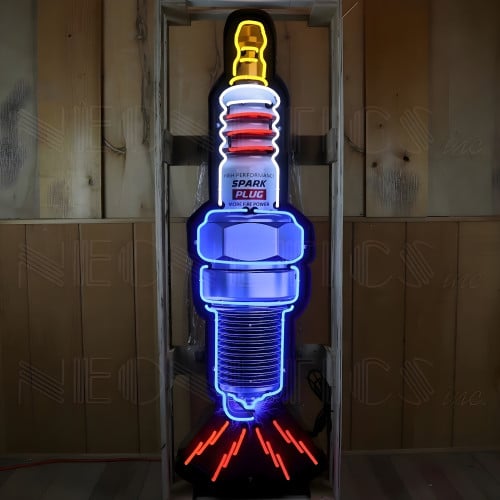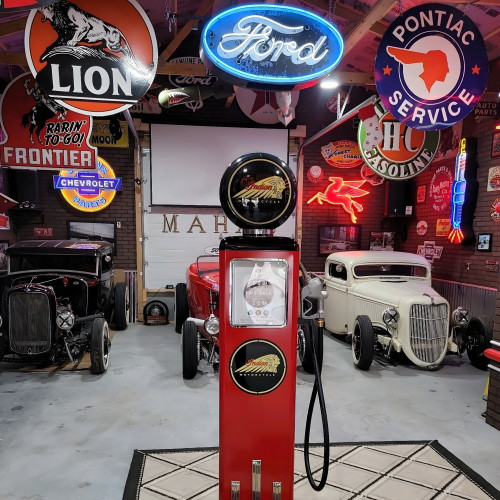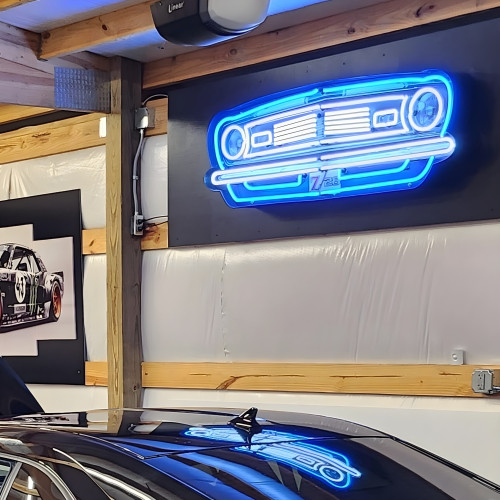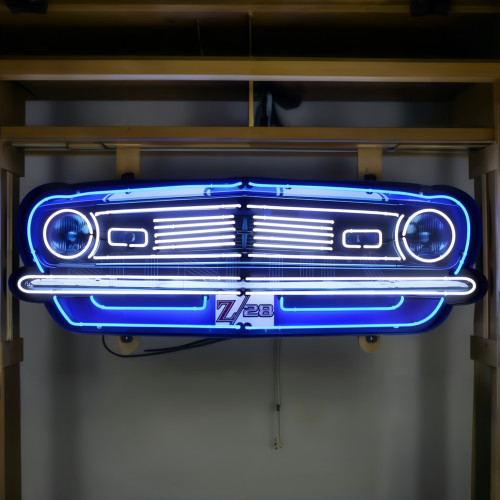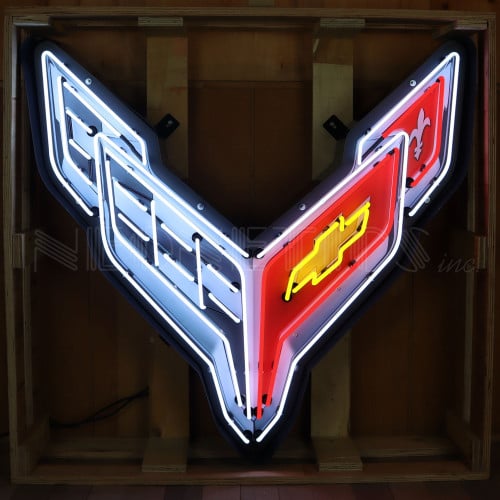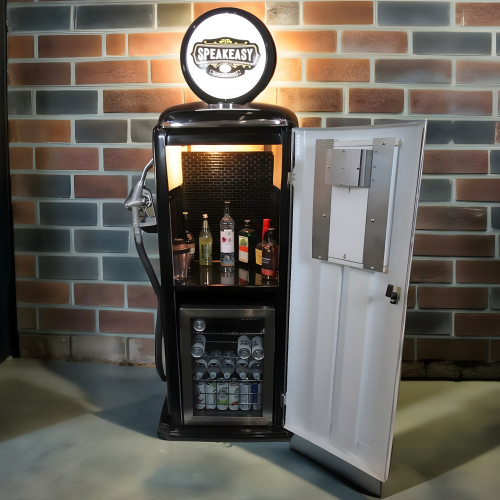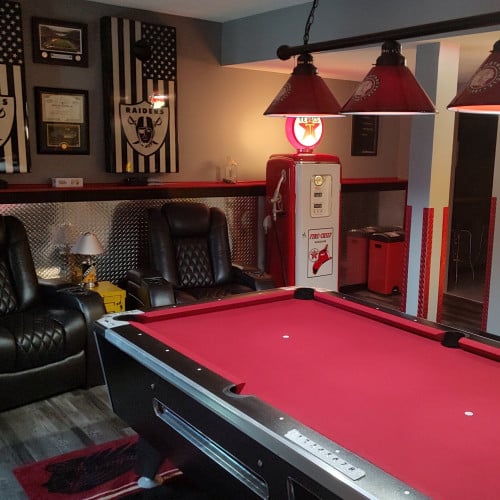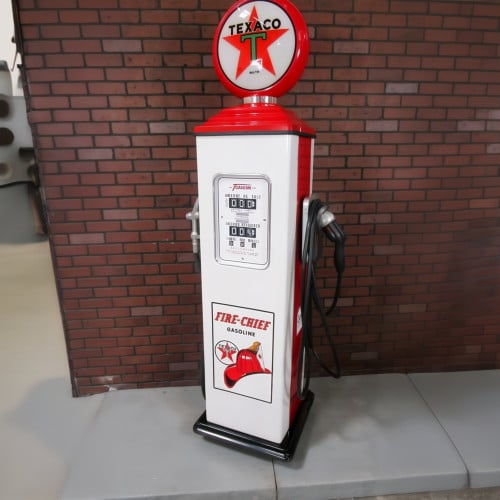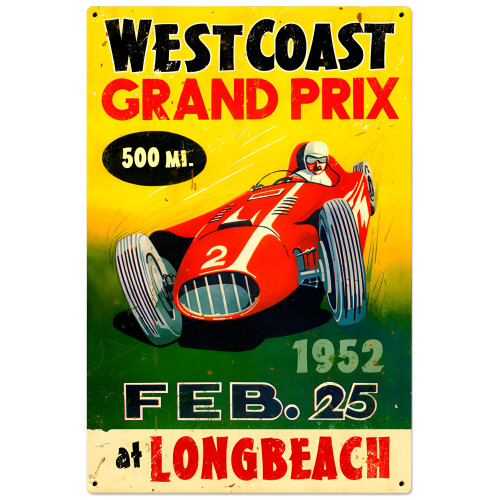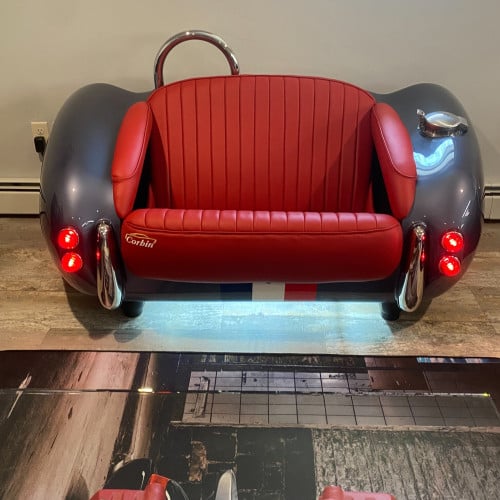

Installing multiple neon signs can transform your garage into a glowing display of automotive history. With a little planning, you can keep the wiring clean, the mounting solid, and the overall look balanced.
Recessed outlets (drywall walls)
Most neon signs use standard plugs. To avoid visible cords pushing the sign off the wall, use recessed “clock” outlets placed behind each sign’s location. If any sign includes a clock, ask the electrician to split a duplex outlet so one receptacle is switched (for the neon) and the other is constant power (for the clock), then run the switched half to a wall switch for easy on/off control.
Surface conduit (cinder block/concrete walls)
Recessed outlets usually aren’t possible on block or concrete. In these garages, wiring is typically in surface-mounted electrical conduit. Plan sign placement above or below the conduit, or use stand-offs or spacers so the sign clears the conduit and device boxes. Keep conduit runs straight and level for a clean, industrial look.
Mounting and structure
Every neon sign has a transformer; older transformers are typically heavier than modern electronic ones. Small, lightweight signs can often be hung with quality wall anchors. Large or vintage signs should be fastened into wall studs. For very large or wide signs, fasten a horizontal furring strip (wood cleat) across multiple studs and mount the sign to that to spread the load and provide multiple pick points.
Planning before drywall
If the walls are still open, install horizontal blocking (wide boards or plywood panels) spanning studs where signs will go. After drywall, you can fasten anywhere along that zone and still hit solid wood without chasing studs.
Masonry mounting
On concrete or cinder block, use proper masonry anchors and pilot holes. Avoid drilling near conduit or surface wiring.
Signs with rubber-tipped support prongs
Some neon signs have small metal prongs with rubber tips that extend outward from the frame. These are designed for window displays—when pressed against glass, the rubber tips keep the sign steady and evenly spaced from the surface. If you’re hanging the sign on a wall instead of a window, those prongs can sometimes be carefully trimmed off. Use a rotary tool, and handle the sign gently to avoid stressing the glass tubing. The key is to work slowly and never twist or bend near the neon tube itself.
Height and safety
Neon tubing is fragile. Mount signs high enough to avoid accidental bumps from people, cars, or tools—six feet from the floor is a practical minimum, higher if you work under lifts. Allow ventilation space around transformers and keep installations away from moisture and oil spray.
Color balance and layout
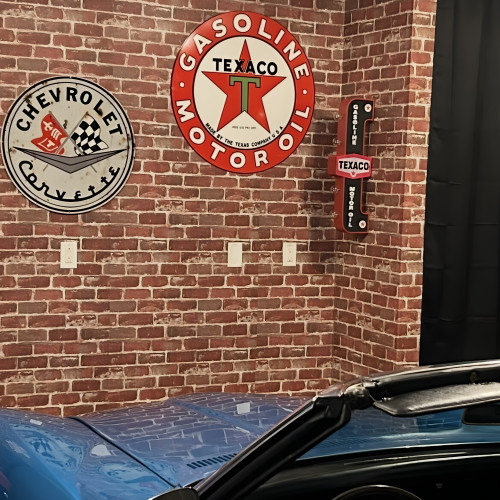
When hanging multiple signs, consider how colors interact. Spreading out the boldest hues and grouping similar tones helps prevent visual clashes (for example, intense reds and greens right next to each other can feel harsh). Distribute bright, high-contrast signs across the room so one wall doesn’t dominate.
- Run neon outlets to a wall switch for convenient control; dedicate a circuit for large collections.
- Use a split (half-hot) duplex where needed: one switched, one constant power for clocks.
- Keep wiring tidy with conduit or cable clips, and label switches/circuits for maintenance.
- Space signs to avoid heat buildup and clutter; always turn off power before electrical work.
With recessed or surface-mounted power planned in advance, solid mounting into studs or masonry, and thoughtful color placement, your garage will glow like a curated automotive gallery—clean, safe, and easy to use.