Gas Pump Manufacturers Explained: Tokheim, Wayne, and Erie
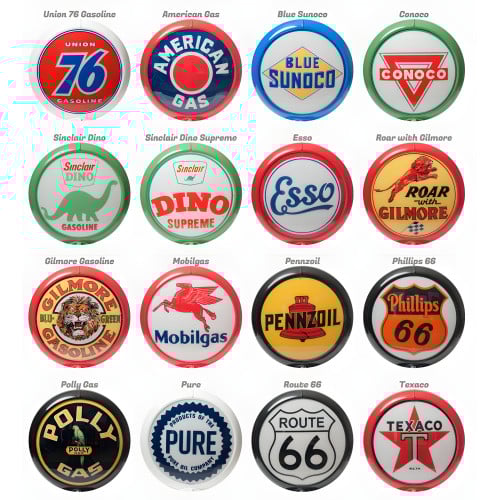
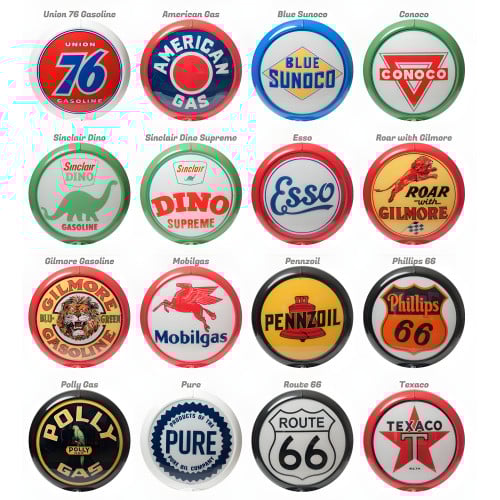
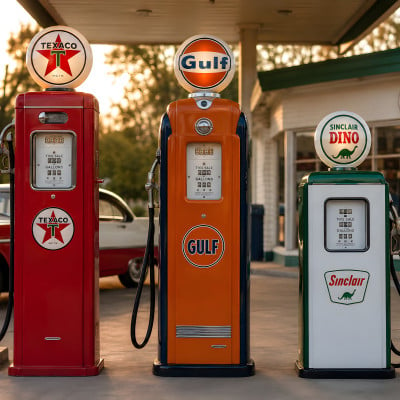
When people think about vintage gas stations, they usually picture familiar names like Texaco, Gulf, Shell, and Sinclair. Those brands appeared on signs, illuminated globes, and the pumps themselves.
But the companies selling the gasoline usually were not the companies manufacturing the pumps.
Think of a Coca-Cola Refrigerator
Imagine a Coca-Cola refrigerator at a grocery store. It may have a large Coca-Cola logo on the door, but Coca-Cola did not manufacture the refrigerator. Another company built the equipment, and Coca-Cola supplied the branding.
Vintage gas pumps worked the same way.
Companies such as Tokheim, Wayne, and Erie manufactured the pumps. Gasoline companies added their logos, colors, advertising, and illuminated globes.
A pump manufactured by Tokheim might have displayed Texaco branding at one station and Gulf branding at another. The name on the globe identified the gasoline being sold, not the company that built the pump.
Tokheim: A Gas Pump Manufacturer Since 1901
Tokheim was founded in Iowa in 1901 and moved to Fort Wayne, Indiana, in 1918. It became one of the best-known manufacturers of gasoline pumps and fueling equipment.
Among its most recognizable designs was the Tokheim Model 39, introduced in 1938 and produced in various versions through approximately 1959.
Early Model 39 pumps were tall, upright machines that fit the appearance of service stations during the late 1930s and early 1940s. Depending on the version, they could include illuminated advertising panels, different gauge arrangements, and different hose configurations.
After World War II, shorter Model 39 variations appeared. These reflected broader changes in service station design and the lower, more streamlined appearance of postwar automobiles.
Although these pumps shared the Model 39 name, they did not all look identical. The design changed during its long production run, and different versions were built for different applications.
In 2016, Tokheim was acquired by Dover and became part of Dover Fueling Solutions. The Tokheim name is still used on modern fueling equipment found at gas stations today.
See today’s Tokheim fuel dispensers.
Wayne: Streamlined Styling and the Model 70
Wayne’s history in fueling equipment dates to 1891.
One of its best-known designs, the Wayne Model 70, was introduced in 1937. It became recognizable for its streamlined shape, rounded upper section, and styling associated with the Art Deco and early modern design movements.
Compared with more squared-off pump designs, the Wayne 70 had a softer, more sculpted appearance. Its distinctive body shape fit the polished and modern image many service stations wanted to project during that era.
The Wayne 70 was produced in several variations rather than as one completely unchanged design. Different versions included changes to the display area, doors, trim, hose arrangement, and other features. Related models were also developed for different station requirements.
Like the Tokheim 39, the Wayne 70 was not limited to one gasoline brand. The same pump design could display different company logos, globes, and advertising depending on which station used it.
Wayne produced many other pump models before and after the Model 70. Its designs changed as stations adopted new technology, mechanical displays evolved, and the industry moved away from the tall pumps common during earlier decades.
Dover acquired Wayne in 2016, placing Wayne and Tokheim under the same parent company. Wayne continues to manufacture modern fuel dispensers, and drivers may still encounter the Wayne name on pumps at gas stations today.
See today’s Wayne fuel dispensers.
Erie: Pennsylvania-Made Gas Station Equipment
Erie began manufacturing service station equipment in Erie, Pennsylvania, in 1922. Originally known as the Erie Service Station Equipment Company, it later operated under the name Erie Meter Systems.
The company manufactured gas pumps, oil dispensers, air equipment, and other products used by service stations.
Erie produced multiple pump designs over the decades. Its early equipment included tall pumps and models with prominent mechanical clock-style displays. Later models used more compact bodies and rectangular display areas that reflected the changing appearance of American service stations.
The Erie Model 129 is associated with the 1950s and represents a later period of gas pump design. Compared with many earlier pumps, it had a simpler and more compact appearance.
Erie pumps were not all identical, and the company was not defined by one particular type of gauge. Different Erie models used different displays, meters, bodies, and equipment configurations depending on when they were manufactured and how they were intended to be used.
As with Tokheim and Wayne, the Erie name identified the company that built the equipment. The branding displayed on an Erie pump depended on the gasoline company using it.
Erie was absorbed by A.O. Smith in the late 1950s. Historical references differ on the exact year, with some identifying 1955 and others identifying 1959. Unlike Tokheim and Wayne, Erie no longer operates as an active gasoline pump brand.
How Gas Pump Designs Changed Over Time
Vintage gas pumps were not all built during the same period or in the same style. Tokheim, Wayne, and Erie each manufactured numerous models, and those designs evolved as fueling technology, automobiles, and service stations changed.
Early pumps were generally tall and sometimes included visible measuring cylinders, prominent mechanical gauges, or decorative architectural details.
By the late 1930s and 1940s, streamlined designs became more common. Manufacturers introduced pumps with smoother body panels, illuminated advertising sections, mechanical computing displays, and shapes influenced by the design trends of the period.
Following World War II, many pumps became shorter and more compact. Service stations were being modernized, automobiles were becoming lower, and equipment manufacturers adjusted their designs accordingly.
These changes did not necessarily result in a completely new model every year. A successful model could remain in production for many years while receiving updated features, revised dimensions, or different equipment configurations.
That is why two pumps carrying the same model name may still have noticeable differences. The year, version, intended application, and original configuration could all affect how a particular pump looked.
Manufacturer, Model, and Gasoline Brand Are Three Different Things
When identifying a vintage gas pump, it helps to separate three details.
Manufacturer: The company that built the pump, such as Tokheim, Wayne, or Erie.
Model: The particular pump design, such as the Tokheim 39, Wayne 70, or Erie 129.
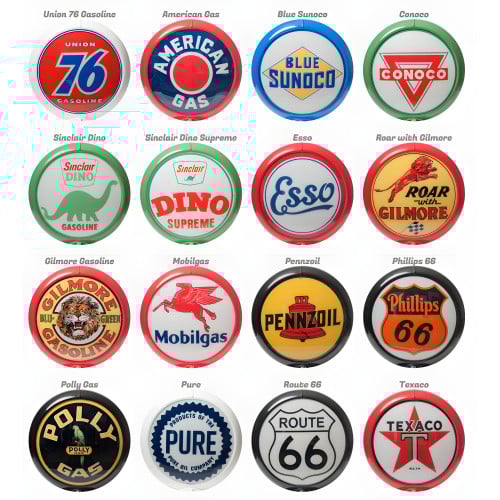
Gasoline brand: The company advertised on the pump, such as Texaco, Gulf, Shell, or Sinclair.
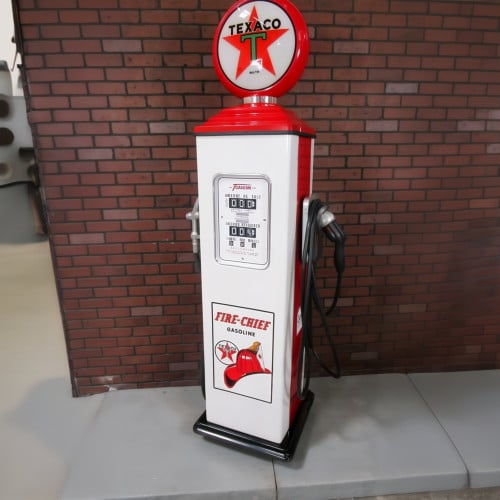
For example, a Texaco-branded Tokheim Model 39 combines three separate identifiers.
Tokheim: The equipment manufacturer.
Model 39: The pump design.
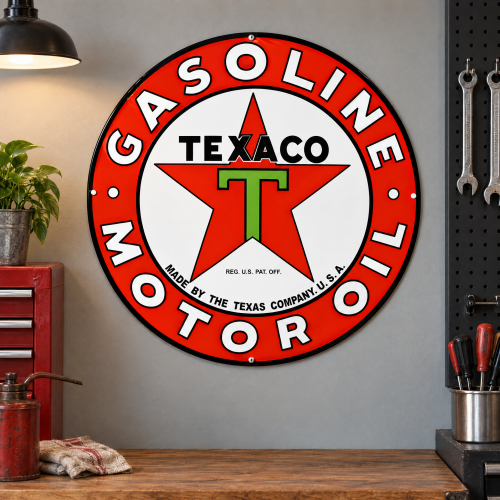
Texaco: The gasoline branding.
The same Tokheim Model 39 could just as easily have displayed Gulf, Shell, Sinclair, or another gasoline company’s branding.
The Same Concept Still Applies Today
The next time you stop for gas, take a closer look at the dispenser.
The sign out front might advertise a familiar gasoline brand, but the dispenser itself was likely manufactured by a separate fueling equipment company.
You may even discover that the modern dispenser carries a Wayne or Tokheim name—the same manufacturers whose earlier models helped define the appearance of vintage American gas stations.
The equipment has changed dramatically, but the relationship remains the same.
The pump manufacturer builds the equipment. The gasoline company supplies the branding.
Find Your Favorite Vintage Gas Pump Style
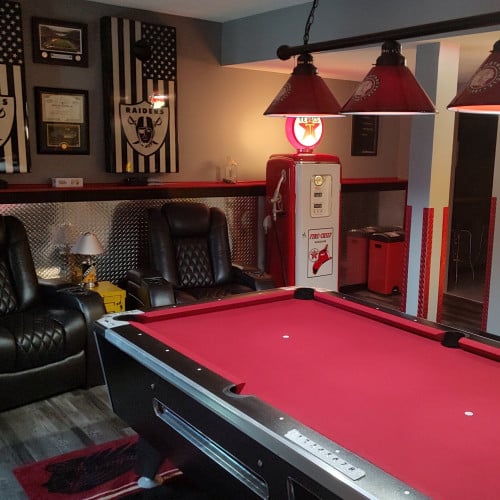
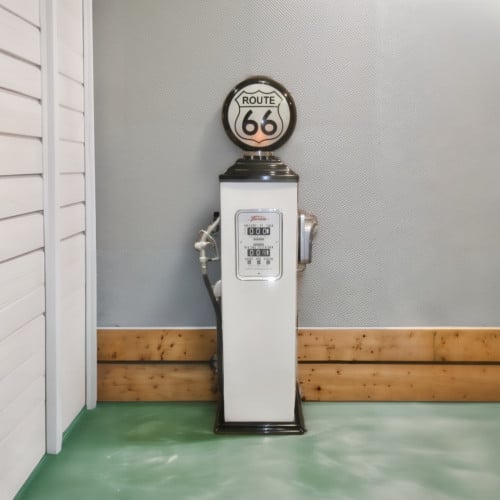
Now that you understand the difference between the pump manufacturer and the gasoline brand, choosing a reproduction comes down to finding the style, size, and branding that fit your garage.
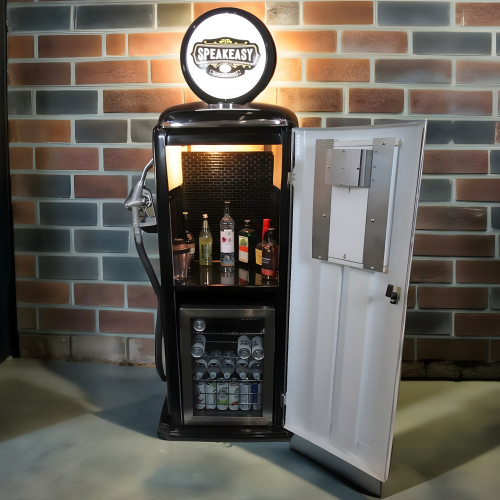
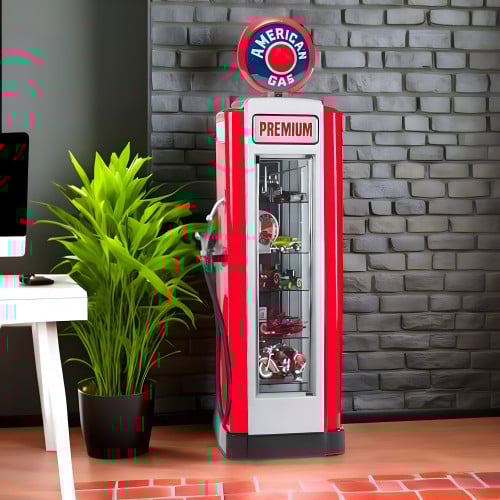
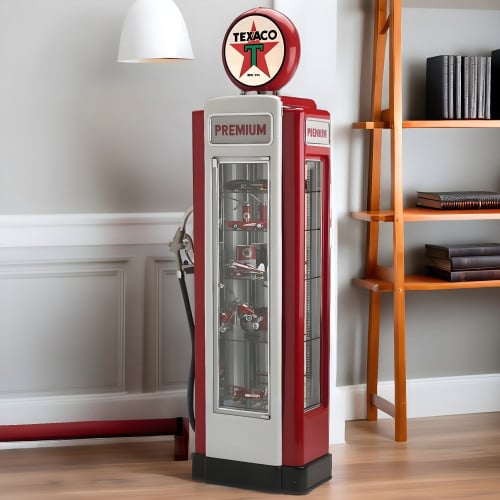
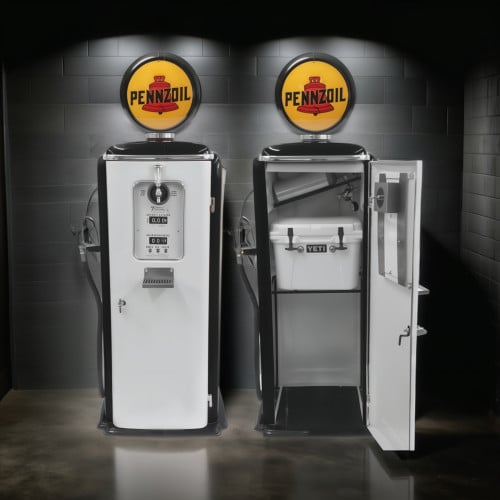
Some reproduction pumps capture the original appearance of vintage Tokheim, Wayne, and Erie designs, while others have been modified to serve an entirely different purpose. Depending on the model, a classic gas pump can become a lighted display case, a working beer dispenser, or even a hidden bar with a refrigerator inside.
Whether you want a traditional service station display or a vintage-style pump with a modern twist, there is a design to match your space.