Commercial trucks, buses, motorhomes and heavy trailers often require substantially more tire pressure than passenger vehicles. While an ordinary car or SUV commonly operates between 30 and 40 PSI, many larger vehicles use tires requiring 80, 100 or even 120 PSI.
Vehicles that commonly use higher tire pressures include:
- Semi tractor-trailers: commonly 95 to 120 PSI
- Heavy-duty box trucks and delivery trucks: commonly 80 to 110 PSI
- Dump trucks and concrete mixers: commonly 90 to 120 PSI
- Garbage and recycling trucks: commonly 90 to 120 PSI
- Motorcoaches and transit buses: commonly 90 to 120 PSI
- Full-size school buses: commonly 80 to 110 PSI
- Fire engines and other heavy emergency vehicles: commonly 100 to 120 PSI
- Class A motorhomes: commonly 80 to 120 PSI
- Larger Class C motorhomes: sometimes 75 to 80 PSI
- Heavy fifth-wheel RV trailers: commonly 80 to 125 PSI
- Commercial equipment trailers: commonly 80 to 125 PSI
- Large boat trailers: commonly 80 to 110 PSI
- Agricultural transport trucks: commonly 80 to 120 PSI
- Race-team transporters and stacker trailers: commonly 80 to 125 PSI
These ranges are general examples, not inflation instructions. The correct cold tire pressure depends on the vehicle, tire size, axle load and manufacturer’s specifications. Drivers should always use the vehicle placard, manufacturer’s recommendation or an approved tire load-and-inflation table. The maximum pressure printed on a tire’s sidewall is not automatically the correct operating pressure for every vehicle or load.
Why Do Larger Vehicles Need Higher Tire Pressure?
Larger vehicles need higher tire pressure because their tires must support considerably more weight. A fully loaded commercial truck, bus or motorhome can place thousands of pounds on each axle. The correct air pressure allows a properly selected tire to carry that load while maintaining its intended shape and controlling heat buildup.
When tire pressure is too low for the weight being carried, the tire flexes more than intended as it rolls. This excess movement can produce heat, accelerate uneven wear and increase the risk of tire damage or failure. Underinflation can also increase rolling resistance, which matters to fleets operating large vehicles over thousands of miles.
This does not mean that every large tire should simply be inflated to the highest pressure possible. Too much pressure can also affect tire wear, ride quality and handling. Each tire must be inflated to the pressure specified for that vehicle and load.
Why an Ordinary Public Air Machine May Not Be Enough
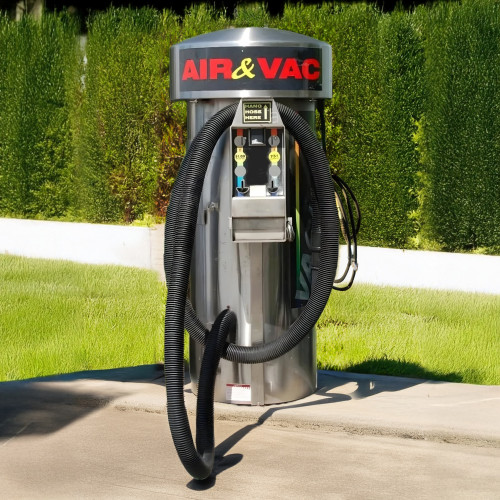
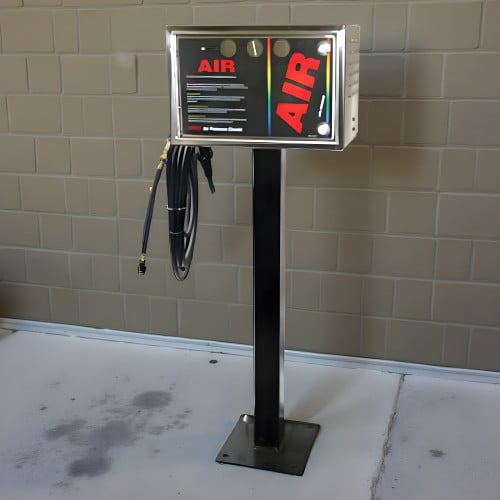
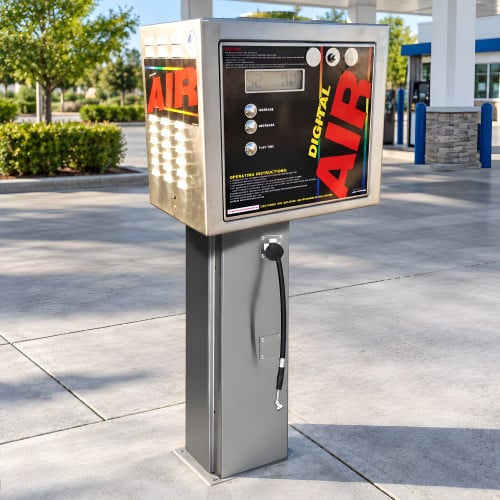
Most public tire inflators are intended for passenger cars, SUVs and light trucks. They may not be designed to reach higher commercial tire pressures or handle the additional inflation time required by large-volume truck and RV tires.
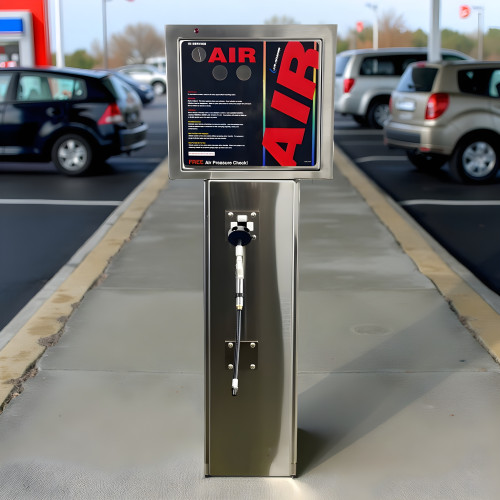
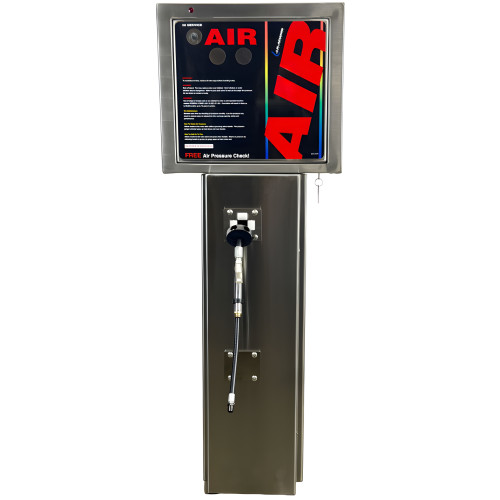
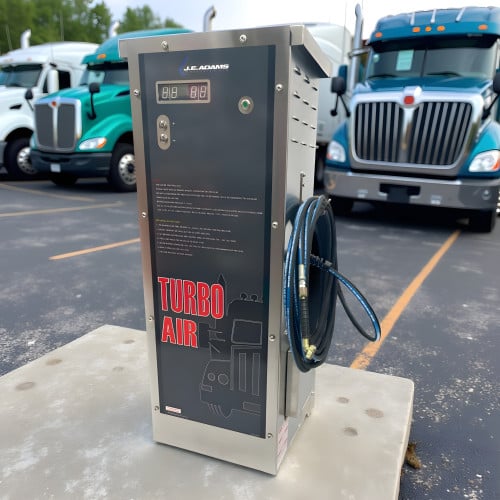
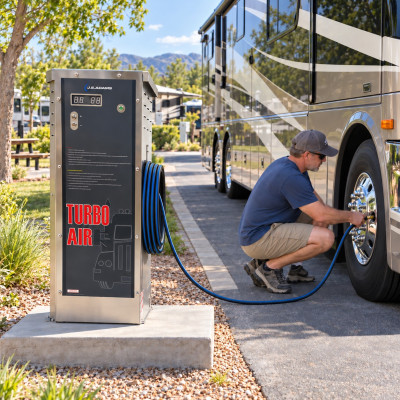
A dedicated high-pressure machine is built for a different purpose. The Commercial Digital Truck and RV Tire Inflation Station offered by Car Guy Garage is intended for larger tires requiring 70 PSI or more and can provide pressure up to 125 PSI. It is not designed for passenger cars or ordinary pickup trucks.
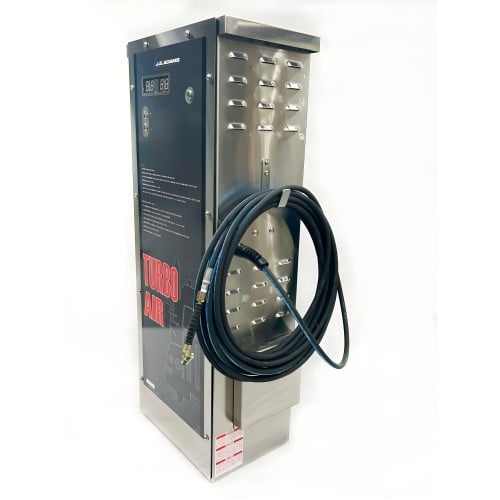
The machine has a digital LED display that allows the user to select the desired pressure. An audible alarm indicates when that pressure has been reached. Its lighted start button makes operation straightforward, and its free-vend design allows drivers to use it without inserting coins, swiping a card or asking an employee to activate it.
Why Not Just Use the Shop Air Compressor?
A properly sized shop compressor can inflate commercial truck, bus and RV tires. The challenge is getting that compressed air to the vehicle without interfering with normal shop operations.
Using the shop compressor may require bringing a large vehicle into a service bay or running a long air hose from the building into the parking area. A motorhome, bus, tractor-trailer or large equipment trailer can occupy valuable bay space, block access or interrupt work already underway. A hose routed through a doorway or across an active work area can also become an unnecessary obstruction.
A dedicated outdoor inflation station allows high-pressure tire service to be placed where large vehicles can reach it conveniently. Depending on the property layout, the machine could be installed along the side or back of a parking area, beside a fleet staging lane or in another location that does not interfere with service bays.
This machine includes a 50-foot, 1/4-inch air hose. That length gives a driver room to position a large vehicle alongside the station and reach multiple tires without parking directly against the cabinet. The installation should still be arranged so the hose does not need to cross an active traffic lane or pedestrian walkway while being used.
By placing the inflation station outdoors, routine tire-pressure corrections can take place without occupying a bay or taking the shop’s primary air equipment away from technicians. Employees, fleet drivers and customers can use the station while normal work continues inside.
Locations That Can Benefit From a High-Pressure Tire Inflator
Truck stops are the most obvious location for a high-pressure air machine, but they are far from the only facilities regularly visited by vehicles requiring more than 70 PSI.
RV Parks and Campgrounds
RV owners may arrive after traveling hundreds of miles while carrying substantial vehicle and cargo weight. Providing high-pressure air gives guests an opportunity to check and correct tire pressure before beginning the next part of their trip. For an RV park or campground, it is a practical amenity directly related to safer and more convenient travel.
The station can be installed in a less congested area where a motorhome or fifth-wheel trailer has enough space to pull alongside it without blocking campground traffic.
RV Dealerships and Service Centers
A dealership handling Class A motorhomes, larger Class C motorhomes and fifth-wheel trailers needs tire-inflation equipment suited to those vehicles. An outdoor station can allow customers or employees to correct tire pressure without moving every RV into a service bay.
This is especially useful when the service department is busy or when a customer only needs air rather than a complete tire inspection or repair.
Bus Depots and Transportation Facilities
School buses, transit buses and motorcoaches commonly use commercial tires requiring considerably more pressure than passenger-car tires. A dedicated inflation station gives drivers and maintenance personnel convenient access to suitable equipment during routine pre-trip inspections.
Locating the machine near a bus staging area allows pressure corrections to be made without moving the bus into a maintenance building.
Municipal and Public-Works Yards
Municipal fleets may include dump trucks, garbage trucks, utility vehicles, buses and emergency equipment. Installing a high-pressure inflator in a central vehicle yard allows multiple departments to use the same station without depending on portable compressors or tying up a maintenance bay.
Fire Stations and Emergency-Service Facilities
Fire apparatus and other heavy emergency vehicles must remain ready for service. Convenient access to high-pressure air can support routine tire inspections and allow personnel to correct low pressure without taking a vehicle elsewhere or unnecessarily occupying an apparatus bay.
Warehouses and Distribution Centers
Distribution facilities frequently receive or operate tractor-trailers, box trucks and heavy delivery vehicles. A high-pressure tire inflation station can support an in-house fleet while also providing a useful courtesy for visiting commercial drivers.
Installing it near a staging or waiting area can keep tire inflation away from loading docks, service bays and primary traffic routes.
Construction and Equipment-Rental Yards
Construction companies and rental businesses frequently operate dump trucks, equipment trailers and other heavily loaded vehicles. These tires may require pressures well beyond the capabilities of an ordinary public air machine. A dedicated station keeps appropriate air service available where the equipment is stored and dispatched.
Commercial Tire Shops and Fleet-Maintenance Facilities
Even when a shop already has compressed air inside its service bays, an outdoor digital station can give drivers access without interrupting technicians or bringing every vehicle into the building. It can be particularly useful for a quick pressure correction that does not require tire repair or replacement.
Marinas and Large Boat-Storage Facilities
Large boats may be transported on multi-axle trailers carrying considerable weight. A marina or storage facility serving these trailers can provide high-pressure air as a useful departure amenity, particularly before customers begin long highway trips.
Racetracks and Motorsports Facilities
Race teams often arrive with motorhomes, tractor-trailers and heavy enclosed transporters. A high-pressure station can serve these support vehicles and trailers without requiring each team to rely entirely on portable equipment.
Agricultural Co-Ops and Farm-Service Centers
Agricultural businesses frequently serve grain trucks, heavy transport vehicles and large trailers. A high-pressure station placed in an accessible outdoor area can provide useful tire service without directing these vehicles into a workshop.
Planning the Installation
The 125 PSI machine requires 120-volt, 60 Hz electrical service on a 30-amp circuit. It weighs approximately 136 pounds without its shipping pallet and should be securely anchored to a suitable mounting surface, such as a properly prepared concrete pad.
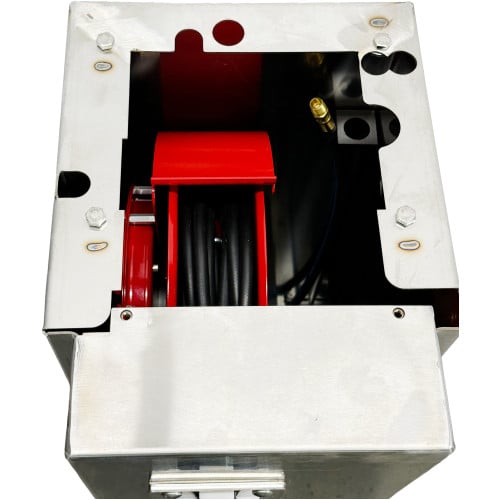
The manufacturer recommends using 3/8-inch anchors to secure the cabinet. Electrical service can be stubbed up through the bottom of the cabinet or brought through a knockout in the rear of the machine.
The unit must be connected to a grounded, permanent wiring system. Installation must comply with applicable local and national electrical codes, and the manufacturer recommends using a licensed electrician.
The location should provide enough room for the intended vehicles to approach the machine, park alongside it and leave without difficult maneuvering. The 50-foot hose provides positioning flexibility, but the station should be placed so the hose remains away from moving traffic and pedestrian areas during use.
Planning the installation during parking-lot construction or renovation may make it easier to run electrical service and prepare the mounting pad. An existing facility can also add a station, but installation cost and complexity will depend on the distance from the electrical panel, available circuit capacity and the amount of pavement or concrete work required.
Special Requirements at Fueling Locations
The machine contains switches, motors and other electrical components that may produce arcs or sparks. When installed at a gasoline-dispensing or service-station location, the manufacturer’s manual requires it to be positioned at least 20 feet horizontally from the exterior enclosure of any fuel pump.
This clearance requirement should be considered before choosing the mounting location, preparing the concrete pad or routing electrical service. The machine should not be used near flammable or combustible liquids.
Tire-sealant products such as Fix-A-Flat must not be used with the machine. The manual identifies these products as highly combustible and states that they cannot be used in conjunction with the air station.
Understanding the Duty Cycle
The machine has a duty cycle of four minutes running followed by six minutes off. It is intended to provide convenient, periodic tire inflation rather than operate continuously as a production compressor.
A facility expecting several large vehicles to use the machine in rapid succession should account for this recovery period when planning how and where it will be used. For an RV park, dealership, municipal yard or similar location where inflation is performed as needed, the station can provide convenient access without dedicating a service bay to routine pressure corrections.
Routine Maintenance
Like any outdoor commercial air machine, the station requires routine inspection. The hose, tire chuck and chuck washer should be checked periodically for wear or damage. The compressor filter should be removed and cleaned monthly, and electrical wires and connections should be periodically inspected for signs of wear or fatigue.
The 50-foot hose should be returned to its hanger after every use. Keeping it off the pavement helps reduce wear, keeps the area organized and prevents the hose from becoming an obstruction.
Servicing and electrical work should be performed only by qualified personnel with power to the machine turned off.
A Practical Amenity for Vehicles That Are Often Overlooked
Public tire-air service is usually designed around cars, SUVs and light trucks. Drivers of motorhomes, buses, commercial trucks and heavy trailers cannot assume that an ordinary air machine will provide the pressure or capability their tires require.
Installing a dedicated high-pressure inflation station fills that service gap. It can support an internal fleet, provide a meaningful customer amenity and allow drivers to address low tire pressure without entering a service bay or interrupting work inside the shop.
The key is matching the equipment to the vehicles using it. This machine is intended for large truck and RV tires requiring at least 70 PSI and provides pressure up to 125 PSI. It is not intended as a general-purpose air machine for passenger cars or ordinary pickup trucks.
For RV parks, bus facilities, municipal yards, warehouses, commercial shops and other properties regularly visited by heavy vehicles, a strategically located high-pressure tire inflator can provide specialized air service exactly where it is needed.
View the Commercial Digital Truck/RV Tire Inflation Station with 125 PSI capacity.