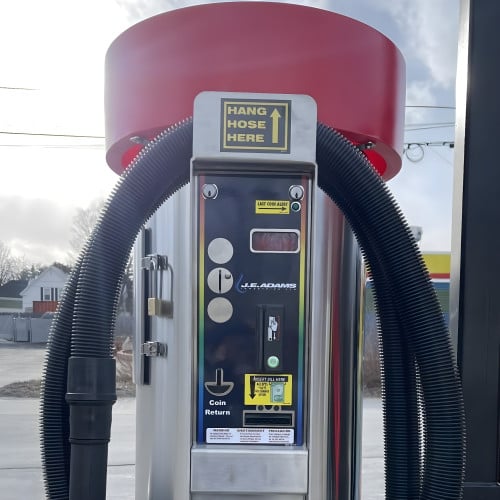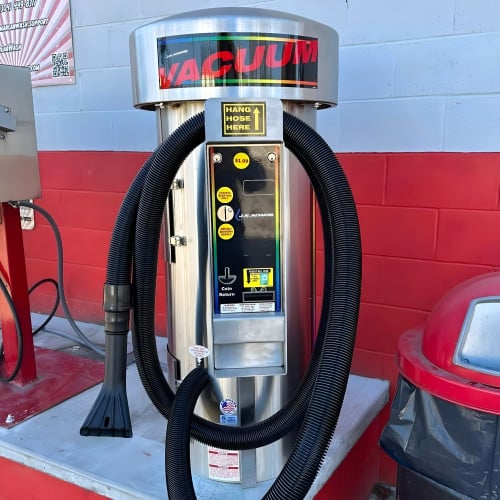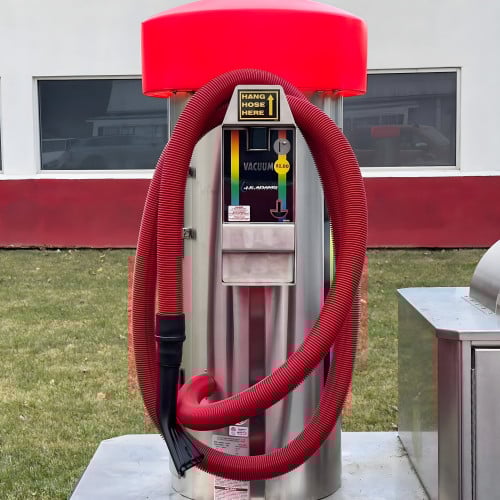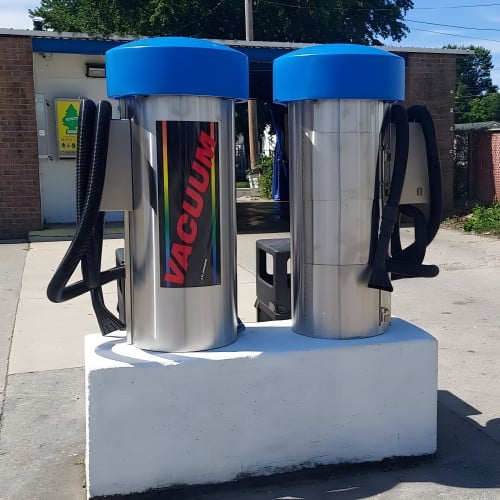
Many people assume that 220-volt equipment is more powerful than 110-volt equipment, but that’s not true. The difference in power from a motor comes from its design, not the voltage that’s delivered to it. Voltage is simply the amount of “push” the electricity has as it moves through the wire. That push doesn’t make the machine stronger — it just means smaller wires can be used to deliver the same amount of electrical power.
A helpful way to think about this is to compare it to cars. A manufacturer might offer the same vehicle with either a gasoline engine or a diesel engine, but both versions are usually built with similar horsepower and torque. That’s because the rest of the car — the transmission, drivetrain, brakes, and frame — is designed to handle a certain level of power. Dropping in an engine that’s dramatically more powerful would mean redesigning everything else around it.
The same idea applies to equipment like vacuums, car lifts, pressure washers, or air compressors. Whether a machine is built for 110 volts or 220 volts, manufacturers usually choose motors with very similar power and performance so that all the other components — wiring, switches, housings, and mechanical parts — operate within their intended limits. It also keeps production simpler and costs lower. In most cases, the main difference is simply that one version is built to run on a 110-volt supply and the other on a 220-volt supply.
It’s certainly possible to design a more powerful 110-volt motor or a more powerful 220-volt motor — voltage itself doesn’t set the limit. But for most equipment, the intended use, performance requirements, and overall system design determine how powerful the motor will be. That’s why a 110-volt and a 220-volt version of the same model almost always deliver the same suction, lifting capacity, or pressure.
The choice of voltage usually comes down to practical reasons such as distance and cost. A 220-volt system allows the use of thinner wires and reduces voltage drop over longer distances, which can significantly lower wiring costs. But when it comes to how the equipment actually performs, voltage doesn’t determine its strength — the motor design does.
Key takeaway: Voltage doesn’t make a machine stronger. It’s the motor design — chosen to match the rest of the system — that determines how powerful the equipment will be.